Library
Explore the documented teachings, encyclicals, and spiritual writings of three great witnesses.
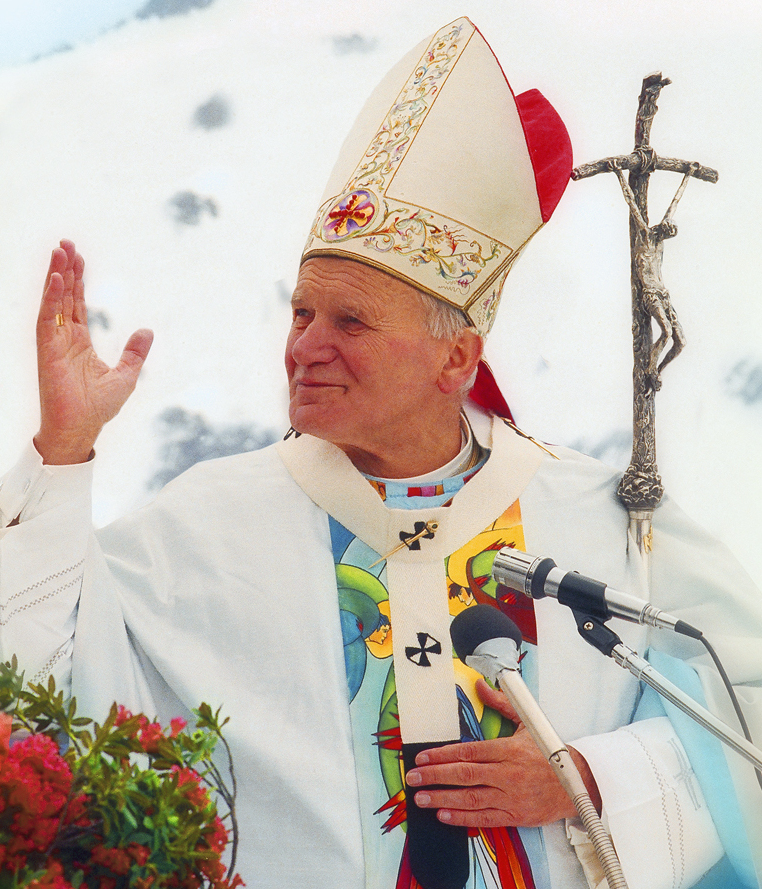
St. John Paul II
Personalist evangelizer, defender of human dignity
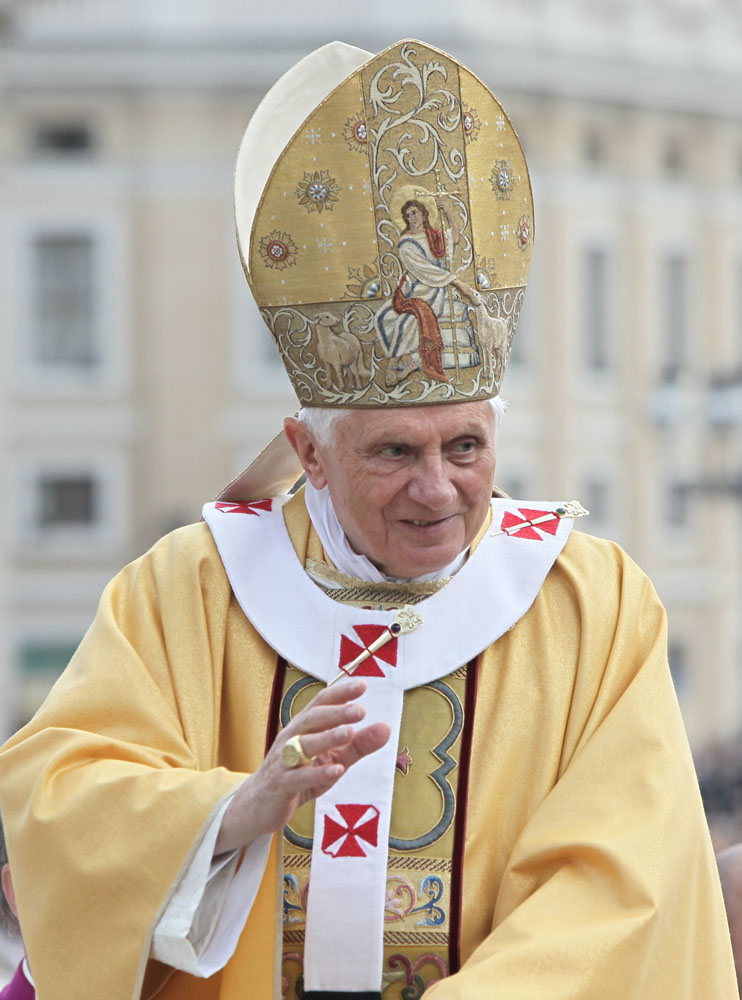
Benedict XVI
Guardian of truth, faith seeking understanding, liturgical beauty
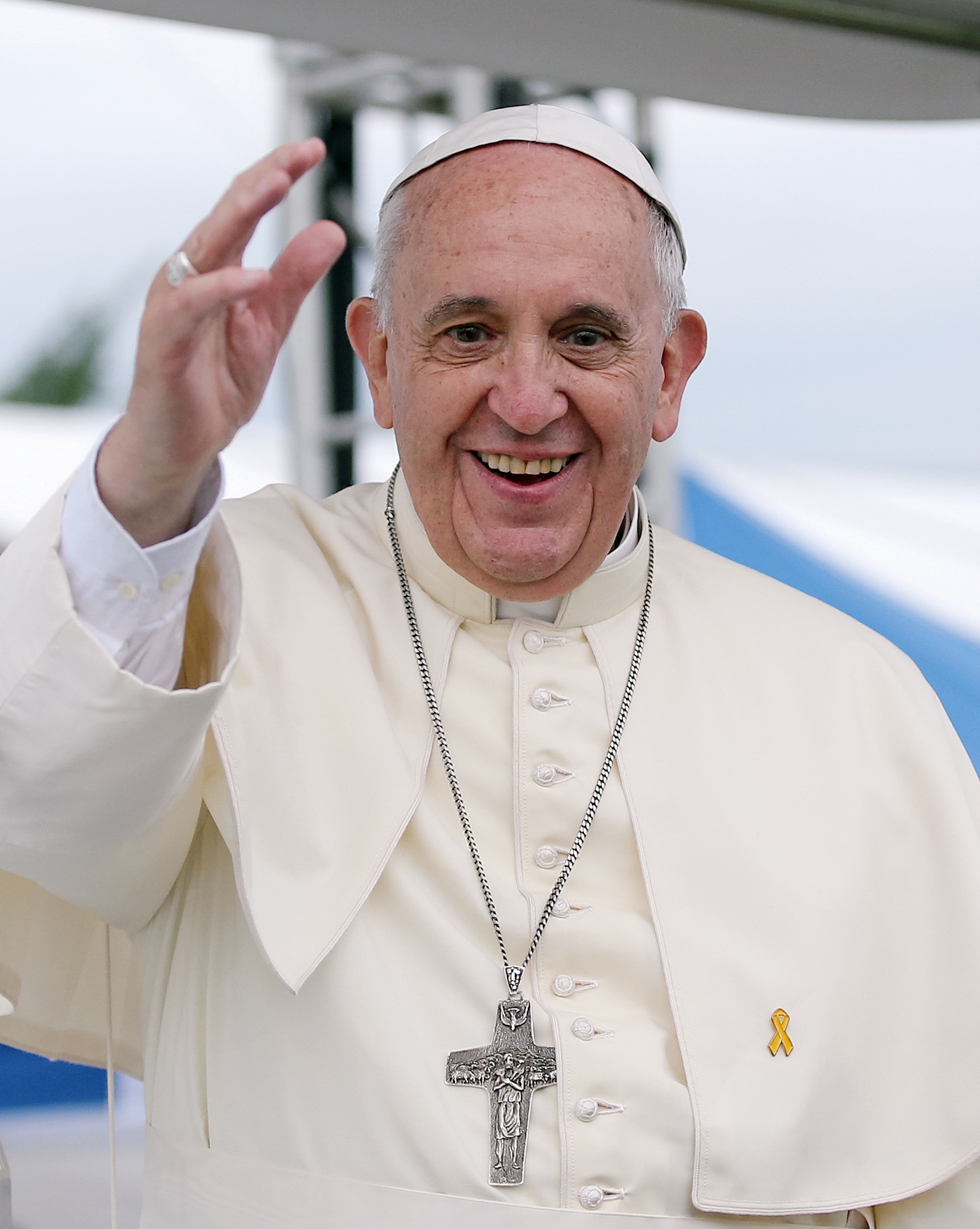
Francis
Missionary of mercy, pastor of peripheries, culture of encounter
Redemptor Hominis
encyclical4 March 1979His first encyclical: the redemption of humanity through Christ. Established the person-centered vision that would define his entire pontificate.
"Man cannot live without love. He remains a being that is incomprehensible for himself, his life is senseless, if love is not revealed to him."— Redemptor Hominis, §10
Dives in Misericordia
encyclical30 November 1980On the mercy of God the Father. Laid the groundwork for the Divine Mercy devotion that would become central to his pontificate.
"Mercy remains the only source of hope for man."— Dives in Misericordia, §15
Laborem Exercens
encyclical14 September 1981On human work and dignity. Articulated the "priority of labor over capital" and work as participation in God's creative act.
"Work is a good thing for man... because through work man not only transforms nature, adapting it to his own needs, but he also achieves fulfillment as a human being."— Laborem Exercens, §9
Salvifici Doloris
apostolic-letter11 February 1984On the Christian meaning of human suffering. Written after the assassination attempt, it explores how suffering united to Christ participates in redemption.
"Each man, in his suffering, can also become a sharer in the redemptive suffering of Christ."— Salvifici Doloris, §19
Veritatis Splendor
encyclical6 August 1993The splendor of truth. A comprehensive defense of universal, objective moral truths knowable by reason and confirmed by revelation.
"Freedom is not the absence of constraints but the capacity to give oneself to the truth."— Veritatis Splendor, §34
Evangelium Vitae
encyclical25 March 1995The Gospel of Life. A definitive defense of the inviolability of human life from conception to natural death against the "culture of death."
"The Gospel of life is at the heart of Jesus' message... it is to be preached with dauntless fidelity as good news to the people of every age and culture."— Evangelium Vitae, §1
Fides et Ratio
encyclical14 September 1998Faith and Reason are "two wings on which the human spirit rises to the contemplation of truth." The most comprehensive modern papal treatment of the faith-reason relationship.
"Faith and reason are like two wings on which the human spirit rises to the contemplation of truth."— Fides et Ratio, §1
Ecclesia de Eucharistia
encyclical17 April 2003The Church draws her life from the Eucharist. Placed the Eucharistic sacrifice at the center of all ecclesial activity.
"The Church draws her life from the Eucharist."— Ecclesia de Eucharistia, §1
Theology of the Body
audience1979–1984 (129 Wednesday Audiences)A groundbreaking catechetical series on human sexuality, marriage, and the nuptial meaning of the body. The body as a "theological place" where God's plan is revealed.
"The body, and it alone, is capable of making visible what is invisible: the spiritual and the divine."— Theology of the Body, General Audience, 20 Feb 1980
Crossing the Threshold of Hope
book1994An interview-book on faith and the modern world. John Paul II's own voice in extended conversation about the deepest questions of human existence.
"Be not afraid! Open wide the doors to Christ!"— Inaugural Homily, 22 October 1978 (referenced throughout)
Deus Caritas Est
encyclical25 December 2005God is Love. Benedict's first encyclical unified eros and agape, showing that human love and divine love are not rivals but reflections of the same source.
"God is love, and he who abides in love abides in God, and God abides in him."— Deus Caritas Est, §1 (1 Jn 4:16)
Spe Salvi
encyclical30 November 2007Saved in Hope. A profound meditation on Christian hope versus secular utopianism, showing that hope transforms suffering without denying it.
"The one who has hope lives differently; the one who hopes has been granted the gift of a new life."— Spe Salvi, §2
Caritas in Veritate
encyclical29 June 2009Charity in Truth. Without truth, charity becomes sentimentality; without charity, truth becomes ideology. A vision of integral human development.
"Charity is at the heart of the Church's social doctrine."— Caritas in Veritate, §2
Jesus of Nazareth (Trilogy)
book2007, 2011, 2012Benedict's personal search for the historical Jesus. A theological meditation combining rigorous scholarship with deep devotion, explicitly described as "my personal search for the face of the Lord."
"Everyone needs a center for his life... Jesus Christ is the center we are all seeking."— Jesus of Nazareth, Vol. 1
Introduction to Christianity
book1968Written as Professor Ratzinger, this foundational catechesis for modern seekers acknowledged that "both the believer and the unbeliever share, each in his own way, doubt and belief."
"Both the believer and the unbeliever share, each in his own way, doubt and belief, if they do not hide from themselves and from the truth of their being."— Introduction to Christianity, Chapter 1
The Spirit of the Liturgy
book2000Written as Cardinal Ratzinger: the liturgy is fundamentally divine gift rather than human work. Beauty in worship as a path to encountering God.
"The liturgy is not something made by us... it is something given to us. We do not “make” the liturgy."— The Spirit of the Liturgy, Part I
Sacramentum Caritatis
exhortation22 February 2007Post-synodal exhortation on the Eucharist. Declared that "beauty is the key to the mystery" and championed liturgical beauty as a path to God.
"Beauty, then, is not mere decoration, but rather an essential element of the liturgical action, since it is an attribute of God himself and his revelation."— Sacramentum Caritatis, §35
Evangelii Gaudium
exhortation24 November 2013The Joy of the Gospel. Francis's programmatic document: the Church must go to the peripheries, the Eucharist is medicine not prize, and joy is the hallmark of evangelization.
"The Eucharist, although it is the fullness of sacramental life, is not a prize for the perfect but a powerful medicine and nourishment for the weak."— Evangelii Gaudium, §47
Laudato Si'
encyclical24 May 2015On Care for Our Common Home. The first encyclical devoted primarily to the environment, introducing "integral ecology" — the principle that "everything is connected."
"Everything is connected. Concern for the environment thus needs to be joined to a sincere love for our fellow human beings."— Laudato Si', §91
Amoris Laetitia
exhortation19 March 2016The Joy of Love. On love in the family. Called for pastoral accompaniment that discerns rather than condemns, walking with those whose situations do not yet reflect the full Gospel ideal.
"No family drops down from heaven perfectly formed; families need constantly to grow and mature in the ability to love."— Amoris Laetitia, §325
Gaudete et Exsultate
exhortation19 March 2018Rejoice and Be Glad. A call to holiness in everyday life — the "saints next door" who practice patience, humility, and good humor.
"We are all called to be holy by living our lives with love and by bearing witness in everything we do."— Gaudete et Exsultate, §14
Fratelli Tutti
encyclical3 October 2020On fraternity and social friendship. Without fraternity, both liberty and equality degenerate into individualism or tyranny.
"Let us dream, then, as a single human family, as fellow travelers sharing the same flesh, as children of the same earth."— Fratelli Tutti, §8
Dilexit Nos
encyclical24 October 2024On the heart of Christ. Francis's final encyclical, a renewal of devotion to the Sacred Heart as the source of all Christian love and mission.
"He loved us. He loved us with a heart of flesh."— Dilexit Nos, Opening